Varicose veins don't appear overnight. And they're not just a cosmetic issue.
They are a sign that something isn't working properly in your leg circulation. Let's break it down in simple terms.
First Things First: How Do Veins Normally Work?
Your veins have a tough job. They carry blood upwards, from your legs back to your heart — against gravity.
To make this possible, veins contain tiny one-way valves that:
- Open to let blood flow upward
- Close to stop blood from flowing backward
When these valves work well, blood flows smoothly. When they don't — Varicose veins happen.
The Root Cause: Weak or Damaged Vein Valves
Varicose veins occur when the valves inside your veins become weak or damaged. When this happens:
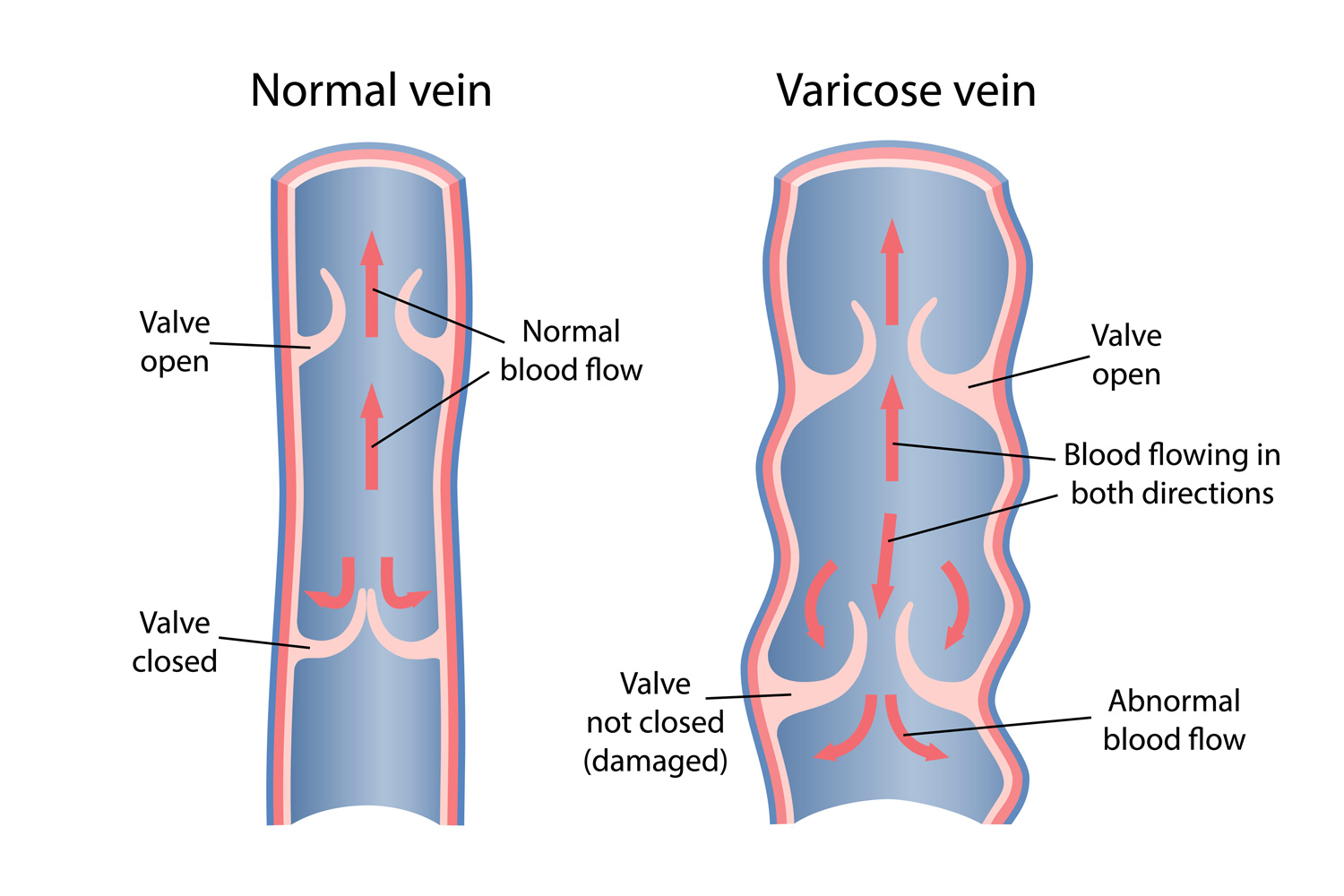
- Blood starts flowing backward (called venous reflux)
- Blood pools inside the vein
- Pressure builds up
- The vein stretches, twists, and becomes visible
Over time, this leads to:
- Bulging veins
- Leg pain and heaviness
- Swelling
- Skin changes
- In severe cases, ulcers
Why Do These Valves Get Weak?
There isn't just one reason. It's usually a combination of factors:
1. Genetics (The Biggest Factor)
If your parents or close relatives have Varicose veins, your risk is significantly higher. You inherit weaker vein walls and poor valve structure. This is why some people develop Varicose veins even in their 20s or 30s.
2. Standing or Sitting for Long Hours
Jobs that require long hours of standing (teachers, surgeons, retail workers) or sitting (IT professionals, drivers) reduce blood movement in the legs. Less movement = more pressure on veins = valve damage over time.
3. Pregnancy
During pregnancy, blood volume increases, hormones relax vein walls, and the growing uterus puts pressure on leg veins. This slows blood return and stresses vein valves. While some veins improve after delivery, many don't fully recover.
4. Ageing
As you age, vein walls lose elasticity and valves weaken naturally. This is why Varicose veins become more common after the age of 40 — but age alone isn't the cause.
5. Obesity or Sudden Weight Gain
Extra weight increases pressure on leg veins and makes it harder for blood to travel upward. This accelerates valve failure, especially if other risk factors are present.
6. Lack of Physical Activity
Movement helps your calf muscles pump blood upward. A sedentary lifestyle means poor circulation, blood pooling, and faster vein damage.
7. Hormonal Factors
Hormonal changes due to pregnancy, menopause, or hormonal medications can relax vein walls and weaken valves.
Why Do Varicose Veins Usually Appear in the Legs?
Because your legs face maximum gravitational pressure. Blood has to travel the longest distance upward from your feet to your heart. That's why Varicose veins rarely appear in arms — but commonly in calves and thighs.
Are Spider Veins and Varicose Veins the Same?
Not exactly.
- Spider veins are smaller, superficial, and usually cosmetic
- Varicose veins are larger, deeper, and often linked to valve failure
Spider veins can be an early warning sign — but Varicose veins indicate a deeper circulation issue.
What Happens If Varicose Veins Are Ignored?
Untreated Varicose veins can progress. Over time, they may cause:
- Chronic leg pain and heaviness
- Persistent swelling
- Skin darkening or thickening
- Itching and eczema-like changes
- Non-healing venous ulcers
- Increased risk of clots in some cases
That's why early evaluation matters.
Can Varicose Veins Be Prevented?
You can't change genetics — but you can slow progression by:
- Staying active
- Avoiding long periods of standing or sitting
- Elevating legs when possible
- Maintaining a healthy weight
- Wearing compression stockings if advised
But once valves are damaged, lifestyle alone cannot fix them.
How Are the Real Causes Diagnosed?
A Doppler ultrasound is the gold standard. It helps doctors:
- See blood flow direction
- Identify faulty valves
- Decide the right treatment
Visible veins alone don't tell the full story — ultrasound does.
The Good News: Modern Treatments Fix the Root Cause
Today, treatments like:
- Endovenous Laser Treatment (EVLT)
- Radiofrequency Ablation (RFA)
- Glue therapy
- Foam sclerotherapy
...seal faulty veins from the inside, correcting reflux — without surgery.
When Should You See a Doctor?
Don't wait if you have:
- Persistent leg pain or heaviness
- Swelling that worsens by evening
- Visible bulging veins
- Skin color changes
- Family history + symptoms
Early treatment is simpler, faster, and more effective.