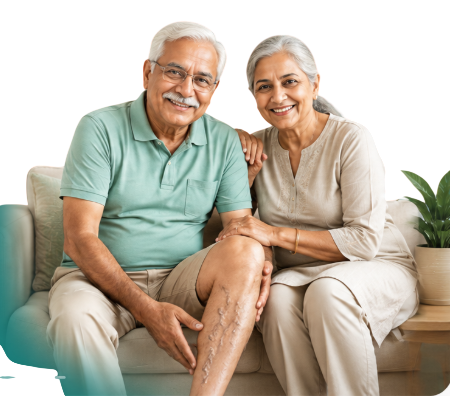
Have you ever experienced heaviness, aching, swelling, or visible twisted veins in your legs? Do these symptoms feel worse after long hours of standing or sitting? This guide covers everything you need to know.
Varicose veins are enlarged veins that usually appear in the legs when tiny one-way valves stop working properly. As a result, blood flows backward, pressure builds, and veins can stretch or bulge.
They are common in India and often affect people who stand, sit, travel, or work for long hours. Early evaluation can prevent symptoms from becoming more complex over time.
What Are Varicose Veins?
Varicose veins are enlarged, twisted veins that usually appear on the legs and feet. They occur when the one-way valves inside veins weaken or fail.
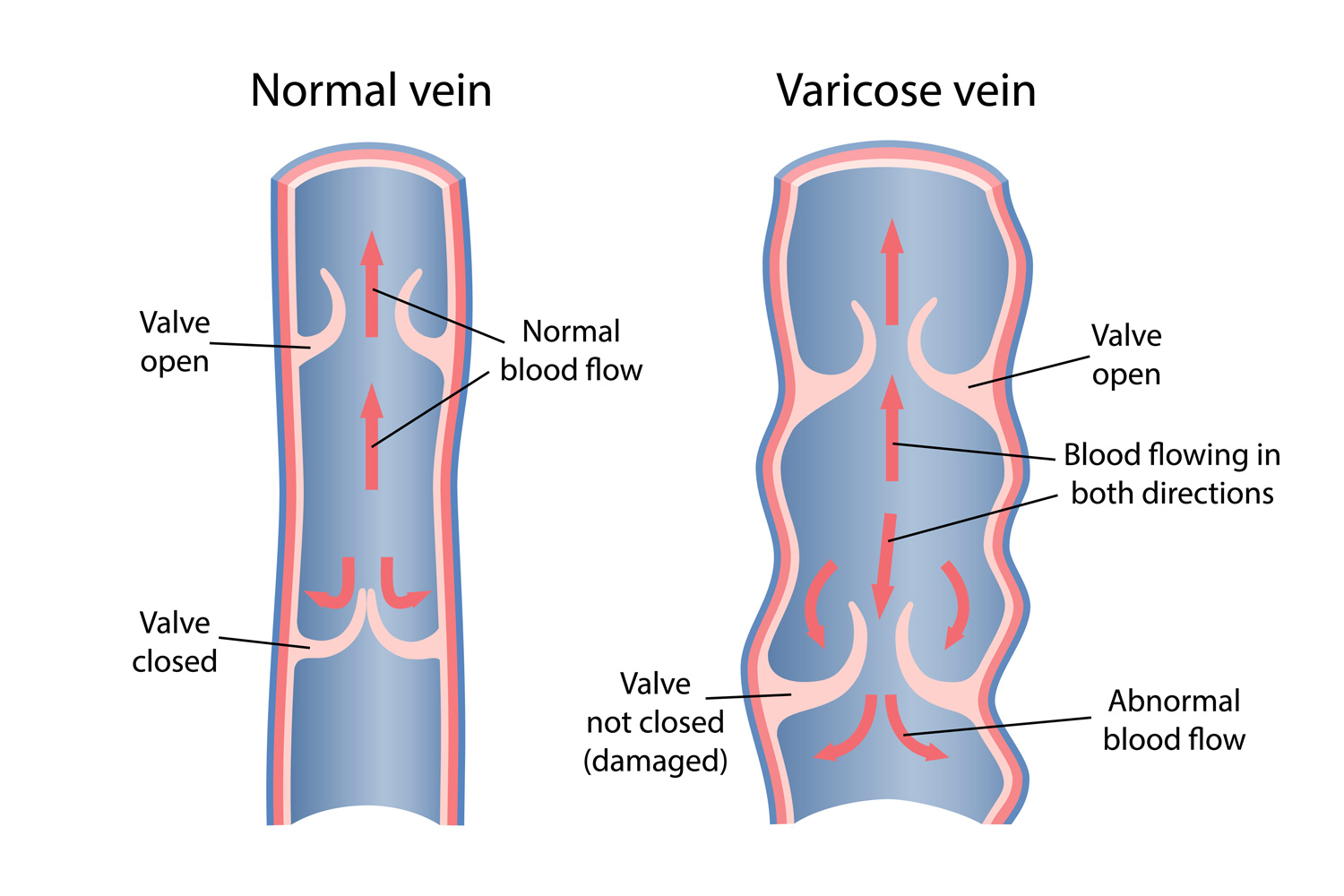
When this happens:
- Blood flows backward (venous reflux)
- Pressure builds inside the vein
- The vein stretches, twists, and becomes visible
This is why varicose veins often worsen with time.
Common Symptoms
Varicose veins don't always start visibly. Many people experience symptoms years before veins become obvious.
- Aching, burning, or throbbing pain in the legs
- Swelling around ankles or calves
- Night cramps and restless legs
- Itching or irritation near affected veins
- Skin changes — darkening or dryness near ankles
- Visible bulging or twisted veins
Symptoms often worsen by evening or after long periods of standing or sitting.
Why Do They Happen?
Varicose veins usually develop due to a combination of factors.
Genetics
The most common cause
Long Hours Standing or Sitting
Prolonged pressure on leg veins
Pregnancy & Hormonal Changes
Increased blood volume and pressure
Age-Related Weakening
Vein walls weaken over time
Excess Body Weight
Increases pressure on veins
Lack of Movement
Reduced blood circulation
They are especially common in people whose work requires them to stay on their feet or seated for long hours.
Are They Dangerous?
Varicose veins are not immediately life-threatening — but they can progress if ignored.
Without treatment, they may lead to:
- Chronic leg pain and swelling
- Skin discoloration and thickening
- Eczema-like skin changes
- Venous ulcers (non-healing wounds)
Early evaluation helps prevent these complications.
When Should You Be Concerned?
You should consider seeing a specialist if:
- Symptoms persist or worsen over time
- Swelling occurs daily
- Skin around the ankles changes color or texture
- Pain interferes with daily activities
- One leg feels consistently worse than the other
- You have a family history of varicose veins
Visible veins alone aren't the only indicator.
How Are They Diagnosed?
Diagnosis goes beyond visual inspection.
A Doppler ultrasound is used to:
- Check blood flow direction
- Identify faulty valves
- Determine which veins are affected
This helps doctors decide whether treatment is needed and which option is best.
Can They Go Away on Their Own?
Unfortunately, damaged vein valves do not repair themselves.
Lifestyle changes like walking, leg elevation, or compression stockings can:
- Reduce symptoms
- Slow progression
But they cannot reverse valve damage.
When symptoms persist, medical treatment may be required.
The Good News: Modern Treatments Are Simple
Today, most varicose veins are treated with minimally invasive, non-surgical procedures.
Common treatment options include:
- EVLT – Endovenous Laser Treatment
- RFA – Radiofrequency Ablation
- Sclerotherapy – Foam Treatment
- VenaSeal – Glue Therapy
These treatments:
- Use only local anesthesia
- Take 30–45 minutes
- Require no hospital stay
- Allow quick recovery
Why Early Evaluation Matters
Early diagnosis:
- Prevents progression
- Reduces complications
- Makes treatment simpler and more effective
- Improves long-term outcomes
Ignoring symptoms often leads to more complex care later.